

Barbara Alisber

VirtualBeauty Makeup Studio Creator
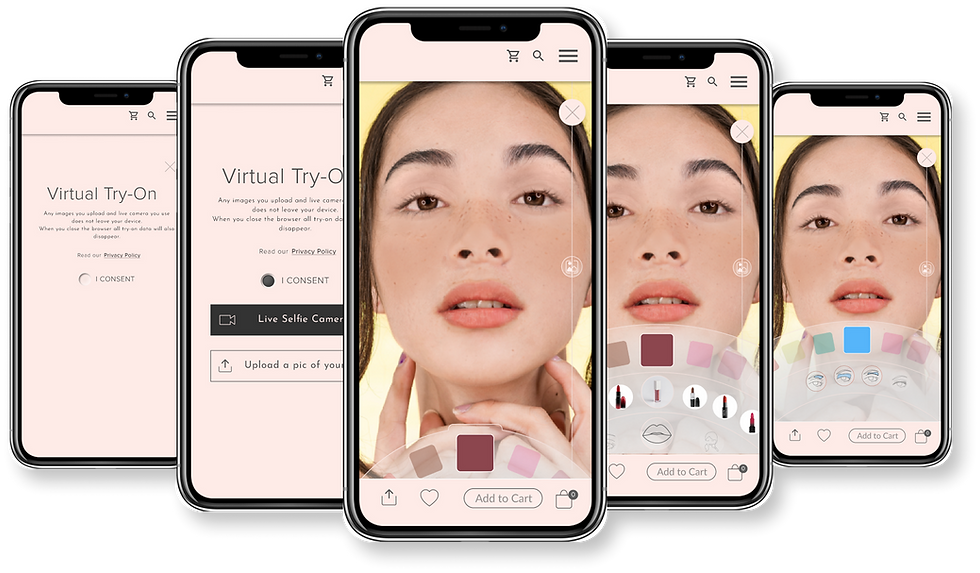
VirtualBeauty is a face recognition AI company that offers virtual makeup try-on for mobile and desktop beauty websites.
2023 - 2025
Client:
VirtualBeauty AI Virtual Makeup Try-On
Type:
Product Design, UX Strategy, SaaS
Role:
Product Designer
Focus:
Designing a web-based Makeup Studio Creator for e-commerce brands
Stage:
SaaS product definition and UX design
Helping beauty brands make virtual try-on feel real
VirtualBeauty is a face recognition AI company offering virtual makeup try-on for mobile and desktop beauty sites.
To support diverse brands and SKUs, they needed a web-based Makeup Studio Creator a tool that would let e-commerce teams recreate real products as virtual makeup in a way that is realistic, inclusive, and efficient.

The challenge
Product results needed to be realistic enough for customers to trust purchase decisions, but existing workflows struggled with skin-tone inclusivity, inconsistent asset quality, and long revision cycles.
On top of that, large asset files risked slowing down client e-commerce sites once integrated.
The Opportunity
Design a SaaS platform where brands can manage their own virtual makeup SKUs configuring colours, finishes, placements, and assets while protecting performance and making the experience intuitive for non-technical users.
What We Did
I led research, UX flows, and interface design for the Makeup Studio Creator, translating technical constraints into a clear, guided builder experience.

1.Research & Problem Framing
Benchmarked competitors, analysed user feedback from beauty brands and shoppers, and synthesised insights into personas and core use cases.
We identified pain points around inclusivity, asset handling, and integration complexity.
2.User Stories, Flows & Red Routes
Defined user stories for beauty founders, e-commerce managers, and makeup scientists. Mapped detailed user flows for creating, editing, and deploying SKUs, then highlighted critical red routes to keep the experience fast and resilient.
3.Interaction & Component Design
Explored different ways to represent palettes and product selections within technical constraints.
Designed a hybrid compact layout for palettes that felt like real-world makeup pans while allowing infinite SKU variations.

4.Wireframes, Prototypes & Handover
Built low- and mid-fidelity wireframes, then interactive prototypes to align design, product, and engineering.
This created a shared blueprint for implementation and future iterations.
Key Insights
Designing for beauty tech means designing for both emotional trust and technical limits what feels magical to users must still be operationally realistic for brands.
Realism Builds Confidence
Tools Need to Match Real Workflows
Structure Enables Scale
Performance Is Part of UX
If virtual try-on doesn't feel believable across skin tones, customers will not rely on it even if the underlying AI is advanced.
E-commerce teams think in SKUs, shades, and campaigns not in technical parameters so the interface had to mirror that mental model.
A clear information model for SKUs, assets, and placements made it possible to onboard many brands without reinventing flows each time.
Lightweight, well-structured assets and thoughtful integration patterns protect both shopper experience and brand trust.
These insights positioned the Makeup Studio Creator as a bridge between AI capability and day-to-day e-commerce reality.
Expected Impact
For Brands
- A self-serve tool to configure realistic virtual makeup across diverse skin tones, reducing back-and-forth with the core AI team.
For Shoppers
- More inclusive and believable try-on experiences, giving people greater confidence when buying beauty products online.
For the Product
- A clearer, more scalable product story for VirtualBeauty moving from custom asset work toward a repeatable SaaS model.